Fitness · Booking & Membership Case study
EducoGym
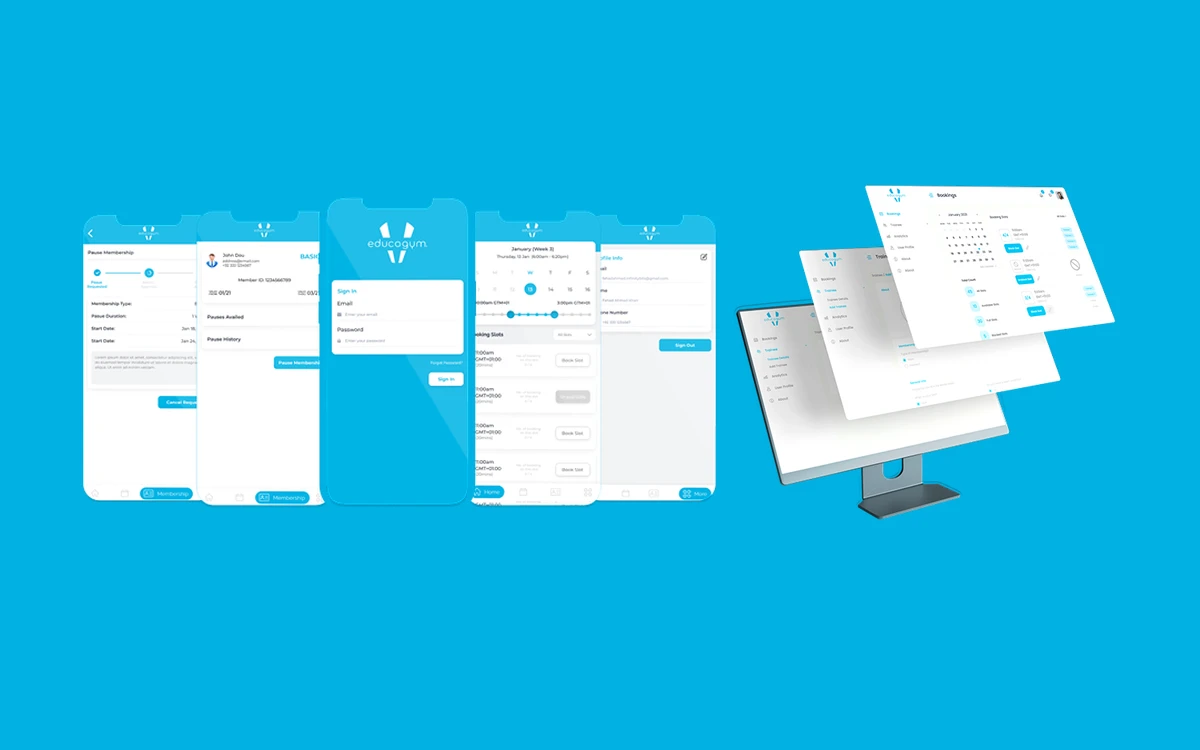
A booking and membership platform for an appointment-based gym operating across thirteen locations, where members train in short supervised sessions rather than dropping in.
Fitness · Booking & Membership
EducoGym EducoGym
Full-Stack Engineering
System map · Scheduling lifecycle
Operational outcome
- Manual operations → self-service Members run their own booking and membership requests
- One portal for staff Slots, bookings and plans instead of by hand
Booking lifecycle
Member
One booking per member per day
Availability
Opening hours, slots and capacity
Book or reschedule
Against the day’s slots
Workout slot
Supervised, not open access
Membership actions
Pause, resume, plan change
Staff portal
- Slot scheduling
- Booking oversight
- Membership approvals
- Thirteen locations
Engineering
Next.js · TypeScript · NestJS · Node.js · AWS
Public product · Described from public sources · Implementation not disclosed
- Role
- Full-Stack Engineering
- Disclosure
- Public product · Described from public sources · Implementation not disclosed
- Links
- Product website
The problem
What the system had to solve.
EducoGym trains people in short supervised sessions rather than open gym access, across thirteen locations. When the service is the appointment, the booking is not a convenience feature - it is the product. Running that on manual booking and membership admin puts a person between every member and every session.
What I owned
The responsibility behind the work.
Contributed to building the platform that moved those operations into a dedicated product: member booking, workout-slot management, membership administration and the staff portal behind them.
Publicly documented as replacing manual gym operations with online booking, workout-slot management, membership management and a full admin portal. Members book a slot per day against available gym hours and can request a membership pause; staff work from a portal covering transactions, trainee plans and booking monitoring.
Engineering approach
How it was built.
The domain problem in a system like this is agreement between three views of the same slot: what the member sees as available, what the schedule actually holds, and what an administrator has changed underneath. Bookings, reschedules, membership pauses and slot changes all move that state, and each has to leave the other two correct. Implementation detail beyond the publicly documented stack is not mine to publish.
Booking path
- Availability
- Slot booking
- Membership action
- Admin review
A gym that is not a gym
Why the usual booking model does not fit.
A conventional gym sells access. Members come when they like, and the software’s job is a door and a direct debit. This operating model is different: members train in short supervised sessions, which means every visit occupies a slot, a trainer and a place — and the business only works if those are allocated rather than assumed.
That turns membership software into scheduling software with a commercial model attached, across thirteen locations that each have their own hours.
What the model requires
- Slots rather than open access
- One booking per member per day
- Availability resolved against each location’s hours
- Supervision capacity, not just floor space
- Membership state that can be paused
What is actually bookable
Availability is computed, not stored.
A member does not choose from a list of slots someone typed in. What is bookable is derived: the gym’s opening hours for that day, the workout slots configured against them, what is already taken, and whether this member has already used their booking for the day.
Resolving a booking
- Location and date
- Opening hours for that day
- Configured workout slots
- Remaining capacity
- Member’s daily entitlement
- Bookable slots
The one-per-day rule is a business rule with a scheduling consequence. It has to be enforced where the booking is made, not checked afterwards by staff looking at a list.
Membership that can be paused
A state machine, not a boolean.
Members go on holiday, get injured, and travel for work. Without a way to pause, the only options are paying for nothing or cancelling — and cancelling is the one the business cannot afford. A pause request is bounded, reviewable, and has consequences for both billing and booking eligibility.
Membership states
- Active membership
- Pause requested
- Approved Bounded period
- Booking suspended
- Resumes automatically
- Declined
- Membership continues
The portal staff actually run the business from
Replacing the operations that used to be manual.
The work replaced a manual operation, which means the measure of it is not the member app but whether staff can run a location without falling back to paper. The portal covers what they previously did by hand: configuring slots, watching bookings, managing trainee plans and seeing transactions.
Staff surface
Scheduling
- Workout-slot configuration
- Booking monitoring
- Capacity per location
Members
- Trainee plans
- Membership and pause requests
- Transactions
Oversight
- Analytics and booking dashboard
Thirteen locations is the number that makes this necessary. One location can be run from a diary; thirteen cannot be run consistently without a system that holds the same rules everywhere.
Engineering scope
What I worked on.
- Member booking against available workout slots
- One slot per day, resolved against the gym’s open hours
- Membership pause requests of up to four weeks
- Workout-slot and booking administration
- Trainee plans and transaction views for staff
- Analytics and booking dashboard
- Online payments
Why these decisions mattered
The trade-offs behind the platform.
Slots, not open access
Availability derived at request time
Pause as a first-class state
One portal for staff
Product surface
Who uses it, against the same model.
- Member
- Browsing availability, booking a daily slot and requesting a membership pause
- Operations
- Workout-slot management and booking administration
- Administration
- Trainee plans, transactions and the booking dashboard
Impact
What the product replaced.
The result was a digital operating layer for appointment-based training: members manage their own booking and membership requests, and staff run slots, bookings and plans from one portal instead of by hand.
Technology
The technical surface.
- Next.js
- TypeScript
- Node.js
- NestJS
- AWS